JillLebofsky may earn a commission if you buy through links on this page, at no extra cost to you. That does not change what we report.
Part of our Neuro Serge overview. Last checked October 28, 2026.
Neuro Serge ingredients, as named on the vendor's sales page, are olive leaf, Cinnamomum cassia, deglycyrrhizinated licorice (DGL), green tea extract, grape seed extract and bilberry extract[1]. That is 6 of a claimed "20+". No Supplement Facts label is published, so there is no serving size and no amount for any ingredient. We checked on October 28, 2026.
Neuro Serge ingredients at a glance
All six named ingredients are food-derived extracts, none has a disclosed amount, and none has a memory trial in the research we read. Grades are ours and describe the human evidence for the use each ingredient was actually studied for.
| Ingredient | Role claimed or implied | Amount disclosed? | Evidence grade (studied use) |
|---|---|---|---|
| Olive leaf extract | Brain support (vendor); blood pressure in studies | No | Moderate for blood pressure and lipids |
| Cinnamomum cassia | Brain support (vendor); weight in studies | No | Limited at gram doses, weak below that |
| DGL licorice | Brain support (vendor); ulcers in studies | No | Weak |
| Green tea extract | Brain support (vendor); weight in studies | No | Weak for weight; liver caution |
| Grape seed extract | Brain support (vendor); blood pressure in studies | No | Limited for blood pressure |
| Bilberry extract | Brain support (vendor); night vision in studies | No | Weak, mostly negative |
| 14 or more unnamed ingredients | Part of the "20+" claim | Not named | Cannot be graded |
What is in each ingredient, and what does research say?
Each named ingredient has human studies, but they measured blood pressure, weight, ulcers or eyesight. Doses in those studies cannot be compared with Neuro Serge because the vendor gives none.
Olive leaf extract
Olive leaf extract comes from the leaves of Olea europaea. A meta-analysis of 12 randomized trials with 819 people found systolic blood pressure 3.86 mmHg lower and triglycerides 9.51 mg/dL lower; the glucose and liver data were rated low to very low quality[2]. A second meta-analysis of 12 trials agreed on blood pressure and glucose[3]. One crossover trial in 60 men with prehypertension used 136 mg oleuropein and 6 mg hydroxytyrosol a day for 6 weeks[4]. Grade: moderate for blood pressure.
Cinnamon (Cinnamomum cassia)
Cassia is one of the main kinds of cinnamon bark. A dose-response meta-analysis of 12 trials (786 people) found weight 1.02 kg lower and waist 2.40 cm smaller, with fat-mass change only at 2 g a day or more for at least 12 weeks[5]. Cassia contains coumarin, which matters for the liver[6]. Grade: limited at gram doses, weak at small blend doses.
Deglycyrrhizinated licorice (DGL)
DGL is licorice root with most of its glycyrrhizin removed. In a double-blind crossover trial of 38 people with gastric ulcer, 760 mg three times a day for 4 weeks healed ulcers no faster than placebo[7]. A 47-person duodenal ulcer trial also found no advantage[8]. Grade: weak.
Green tea extract
Green tea extract concentrates catechins such as EGCG and usually caffeine. A Cochrane review found green tea preparations gave a small weight loss "not likely to be clinically important"[9]. A safety review of 159 human studies set 338 mg EGCG a day as a safe intake for capsule-type doses[10]. Grade: weak for weight, with a liver caution.
Grape seed extract
Grape seed extract is made from the seeds of grapes. A meta-analysis of 16 randomized trials found a modest drop in blood pressure, clearer in younger, obese or metabolic patients, at 100 to 2,000 mg a day[11]. Samples were small. Grade: limited for blood pressure.
Bilberry extract
Bilberry extract comes from the dark berries of Vaccinium myrtillus and is rich in anthocyanosides. A systematic review of 30 trials found the 4 most recent randomized trials on night vision were all negative[12]. NCCIH notes up to 160 mg a day of extract was used safely for 6 months[13]. Grade: weak, mostly negative.
How transparent is the Neuro Serge formula?
The Neuro Serge formula is not transparent. The vendor names 6 ingredients, gives 0 amounts, and describes the blend two different ways on the same page.
One line says "Proprietary Blend of 20+ Plants and Nutrients". Another says "Proprietary Blend of 4 Plants and Minerals"[1]. Six named ingredients is more than 4 and fewer than 20, so at least one of those lines is wrong. If "20+" is right, at least 14 ingredients are unnamed. We also found no label page or label image: paths such as /label and /images/label.png returned 404 errors on October 28, 2026.
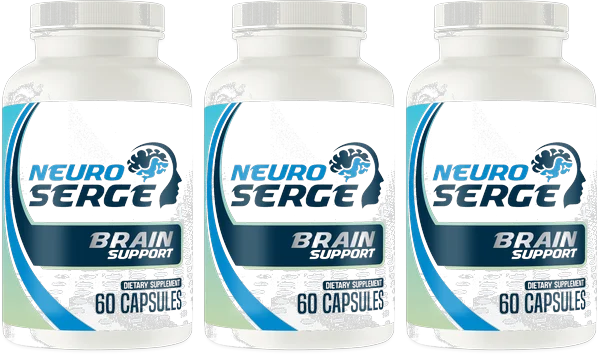
Bottles hold 60 capsules and are sold as 30-day supplies, which implies 2 capsules a day, though the vendor never says so. Other websites may print fuller lists. When lists disagree, the label on the bottle you receive wins. Ask for it before you buy.
Ingredient safety and interactions
The biggest cautions are liver and blood pressure. Cassia contains coumarin, and NCCIH says prolonged use "could be an issue for sensitive people, such as those with liver disease"[6]. Green tea extract capsules have been linked to uncommon liver injury[14]. Whole licorice raises blood pressure and lowers potassium; DGL removes most of that risk but may keep a small residue[15].
Cassia and olive leaf may add to blood-sugar medicine. The full list, with who should ask a doctor first, is on our Neuro Serge side effects page.
Do these ingredients prove Neuro Serge works?
No. Ingredient studies show what one extract did at a known dose in a specific group. Neuro Serge mixes 20 or more ingredients at unknown doses and has no trial of its own.
The evidence on memory and focus is covered on our Neuro Serge nootropic page, and the sales-page promises are checked on the cognitive boost claims page. If you order, the cheapest option is 2 bottles for $167.95 delivered, checked October 28, 2026.
Back to the Neuro Serge overview.
Frequently asked questions
What are the ingredients in Neuro Serge?
The vendor names six: olive leaf, Cinnamomum cassia, deglycyrrhizinated licorice, green tea extract, grape seed extract and bilberry extract. It claims 20 or more in total but publishes no full list, no amounts and no Supplement Facts label, checked October 28, 2026.
Does Neuro Serge have a Supplement Facts label?
No label was published on the vendor site when we checked on October 28, 2026. Label pages and label image paths returned 404 errors. Ask support for the label before ordering and compare it with the bottle you receive.
Is the cinnamon in Neuro Serge cassia or Ceylon?
The vendor names Cinnamomum cassia. Cassia contains coumarin, and NCCIH says prolonged use could be an issue for sensitive people, such as those with liver disease. The amount in Neuro Serge is not disclosed.
Is the licorice in Neuro Serge safe for blood pressure?
The vendor names deglycyrrhizinated licorice, which has most glycyrrhizin removed, the compound that raises blood pressure. DGL may keep a small residue, so people on blood pressure drugs, diuretics or digoxin should confirm the product is truly deglycyrrhizinated.
How many capsules of Neuro Serge are in a bottle?
Each bottle holds 60 capsules and is sold as a 30-day supply, which implies 2 capsules a day. The vendor states no serving size; its only direction is to take Neuro Serge with water.
Sources
- Neuro Serge sales page. Neuro Serge vendor, read October 28, 2026.
- Olive leaf extract and cardiometabolic markers: meta-analysis of 12 randomized trials (PMID 36271405). PubMed, National Library of Medicine, read October 28, 2026.
- Olive leaf extract, blood pressure and glucose: meta-analysis of 12 trials (PMID 38287654). PubMed, National Library of Medicine, read October 28, 2026.
- Olive leaf extract in prehypertensive men, randomized crossover trial (PMID 26951205). PubMed, National Library of Medicine, read October 28, 2026.
- Cinnamon and body weight: dose-response meta-analysis of 12 trials (PMID 30799194). PubMed, National Library of Medicine, read October 28, 2026.
- Cinnamon. National Center for Complementary and Integrative Health (NCCIH), read October 28, 2026.
- Deglycyrrhizinated licorice in gastric ulcer, double-blind crossover trial (PMID 4584640). PubMed, National Library of Medicine, read October 28, 2026.
- Deglycyrrhizinated licorice in duodenal ulcer, controlled trial (PMID 4933135). PubMed, National Library of Medicine, read October 28, 2026.
- Green tea for weight loss and weight maintenance, Cochrane review (PMID 23235664). PubMed, National Library of Medicine, read October 28, 2026.
- Safety of green tea catechins: review of 159 human studies (PMID 29580974). PubMed, National Library of Medicine, read October 28, 2026.
- Grape seed extract and blood pressure: meta-analysis of 16 randomized trials (PMID 27537554). PubMed, National Library of Medicine, read October 28, 2026.
- Bilberry and night vision: systematic review of 30 trials (PMID 14711439). PubMed, National Library of Medicine, read October 28, 2026.
- Bilberry. National Center for Complementary and Integrative Health (NCCIH), read October 28, 2026.
- Green Tea. National Center for Complementary and Integrative Health (NCCIH), read October 28, 2026.
- Licorice, LactMed entry (PMID 30000900). PubMed, National Library of Medicine, read October 28, 2026.
This page is general information, not medical advice. Dietary supplements are not reviewed by the FDA for safety or effectiveness before they are sold and are not intended to diagnose, treat, cure or prevent any disease. Talk to your doctor before taking any supplement, especially if you are pregnant, nursing, take medication or have a health condition.